BASIS Prague: Hands-On Experience in Practice
In education, some of the most meaningful learning happens when children experience concepts directly. Hands-on experience allows students to engage with real materials, real processes, and real-world phenomena, turning abstract ideas into something tangible and memorable.
At BASIS Prague, this approach is part of both preschool and school learning. Across subjects, students are regularly invited to observe, participate, and reflect through experiences that connect directly to the curriculum.
Preschool
Growing Herbs Together
One example of hands-on learning in our preschool was a family planting activity, where children and parents planted herbs such as chives, basil, and parsley in decorated pots. What began as a creative moment naturally became a lesson in responsibility and observation. Children saw how plants depend on care, light, and water, while experiencing pride in creating something together with their families. These shared moments strengthen the home–school connection and encourage curiosity about nature and growth.
Watching Chicks Hatch
Another powerful experience was the arrival of baby chicks in the classroom. Preschool children observed eggs developing and hatching in an incubator, watching closely as cracks appeared and chicks emerged. Once born, the children helped care for them by feeding them, giving them water, and keeping them warm and safe. The experience brought science to life, helping children understand life cycles through direct interaction while building empathy and responsibility for living creatures.

School
Chicks Hatching in Action
Students in the elementary and middle school also took part in the chick-hatching project, which was closely linked to their science curriculum. The experience supported topics such as animal life cycles, food chains, and habitats.
Students followed egg development in real time, observing changes day by day rather than only reading about them. In one case, a chick took longer to hatch than expected, which led to valuable discussion about variation in natural processes and patience in observation. These moments helped students understand that biology does not always follow fixed timelines and that careful observation is essential in science.
Across preschool and school groups, the chicks were cared for before being rehomed with one of the families connected to BASIS Prague.
From Caterpillars to Butterflies
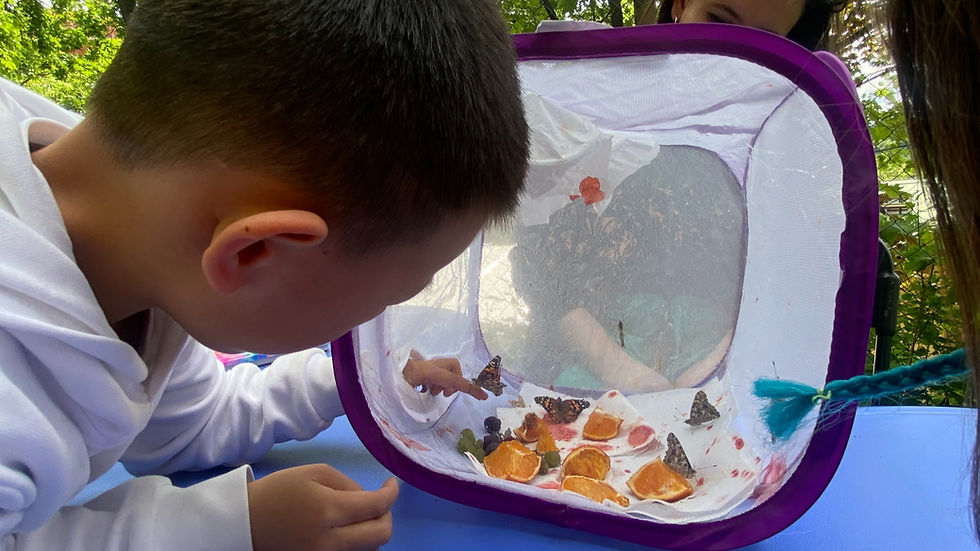
Students in Levels 1–3 explored the butterfly lifecycle over several weeks, beginning with caterpillars. They watched closely as the caterpillars grew and changed day by day, cared for them, and followed the remarkable process as they formed chrysalises and eventually transformed into butterflies.
When the butterflies emerged, they were gently released into nature. Seeing this transformation unfold in real time gave students a meaningful, first-hand understanding of metamorphosis and a deeper appreciation of the role insects play in the balance of ecosystems.

Discovering Fish Anatomy
For Level 3 students, science becomes even more tangible through a fish dissection. Working carefully and with curiosity, students explore the internal anatomy of a fish, identifying key organs and discovering how structure and function are connected.
The experience encourages close observation and thoughtful discussion, helping students think more deeply about how living organisms are designed to adapt and survive in their environments.

Hands-on experiences bring learning to life in a way that classroom instruction alone often cannot. At BASIS Prague, students regularly step into real situations connected to what they are learning, which helps them make sense of ideas in a deeper and more lasting way.
When children learn through experience, they don’t just remember information—they understand it, because they have seen it, tried it, and been part of it.